New Client Reference.


Sharissa started working with me in early September.  I will be 70 in March and although I’ve been active most of my life–jogging and when my knees failed, roller blading for an hour 5/week or doing indoor exercise when the weather didn’t permit outdoor–I stopped about two years ago when my husband, Martin, started having physical and mental problems due to hydrocephalus.  Over that time, but mostly in the past year, I gained close to 15 lbs. and became quite flabby and a bit off balance.

During Sharissa’s initial assessment of me she quickly

perceived my problems of imbalance and weakness and set up a program that gradually addressed those issues.  After about 12 hours’ training with her–that is, after a mere six weeks, I can feel a remarkable difference in muscle tone and stamina.  I do not think that I will need her after this second series of 10 sessions because I feel so much better and believe that I can continue exercising on my own the way I used to.

Sharissa is a miracle worker!  Not only has she helped me but I see a great difference in the work she has done with Martin who turned 83 in September.  He had brain surgery in March to correct the accumulation of fluid there and needed five months to recover, but his recovery has been more dramatic since Sharissa started working with him.  While I see my time with Sharissa as short-term, I see Martin’s time with her as long-term, and it’s money well spent because of the splendid results.

​  I want my husband to live a long, long time and Sharissa is the link to that eventuality.​


Sharissa really knows about old bodies:

he knows what she’s doing and has never left us, even after an arduous session, feeling hurt.​Beyond that, she’s a joy to be with​–we laugh a lot! ​​–we laugh a lot! ​We couldn’t recommend dear Sharissa ​more highly!


We wish you healthy lives!

Jane and Martin


When the Fit Gain Weight: My Personal Story

When the Fit Gain Weight: My Personal Story


Early this past summer I started to pack on a few pounds just around my waist. I first noticed it when I bent over and felt uncomfortable — like something was in my way (and something was — my pot belly!). When riding the subway I felt myself jiggle for the first time ever. “Jiggle,” I thought in horror, “I have never jiggled before.”


I wasn’t the only one who noticed. “You have a lot of padding around the middle now, huh?” said my mom when we went swimming. My skin was also breaking out on the lower half of my face, a sign of hormonal changes.


What happened? Eating right and exercise is my whole life, it’s my job. What was going on?


As it turns out, there were several things going on. One was the “A” word (age); the other was the “G” word (genetics). Then, there was the “D” word: I had to “deal” with this new increased body fat if my clients were going to take me seriously. Not that making it a priority was hard. I just did not feel like myself carrying the extra weight.


Taking a Hard Look at My Weight Gain

First, I needed to get to the bottom of this excess weight: What happened and why? I had to do some thinking and get some help from my doctor.


My physician reminded me that I am in my late 40s and several body changes were going on with me. One was the loss of muscle mass. We all lose 10% of mass per decade and I am approaching my fifth decade.


Also, two hormones were to blame for this new middle I was getting: insulin and estrogen.


Plus, any trauma to the body can make it easier to accumulate body fat. I had two traumas: surgery for benign tumors about a year and a half ago. I also had some awful cold that lasted all summer.


In other words, my body had changed although my caloric intake and exercise regime had not.


Let’s take a closer look at the culprits for my situation:


  1. Estrogen: For women in their late 40s, the ovaries just do not produce as much estrogen as they produced in a woman’s 20s or 30s. This is the start of menopause. As you age, your body starts to add more belly fat, which produces estrogen instead to make up for what the ovaries can no longer produce. While I will not over-exert myself to have a perfect belly so I can hang on to some of my natural estrogen, I have been tying to have sweet potatoes every week, a mildly estrogenic food.


  1. Muscle loss: A natural part of the aging process. Muscle uses a lot of energy (calories). So my caloric baseline (the amount of calories you need to exist per day) had gone down. Therefore, I had to change the way I was eating to consume fewer calories.


  1. Trauma: Surgery, although not major, can affect the body by contributing to the release of stress hormones. In other words, surgery can contribute to your body retaining fat. I guess the surgery had caused me to put on a little weight.


  1. The common cold: When your immune system is in a weakened state, it’s harder to fight off colds and fat gain. My cold was a long-lasting one or possibly even one of several colds, according to my doctor.


But while I did not have bronchitis, after my checkup I got more bad news regarding aging and genetics. My blood work had shown that I was almost pre- diabetic or  danger of getting diabetes eventually. I stammered at the news! Diabetes? Me? I am in such good shape! I can’t even remember the last time I had a doughnut, and I never drink soda. I was really shocked.


“You?” One of my friends exclaimed when I told her the news, “Diabetes?! How is that even possible?”


Then I called my dad to inquire about my family health history. He reminded me that my grandfather and other family members had diabetes, so it was in my genetic makeup. Then I remembered my Grandpa, always pricking his fingers and talking about his carbohydrates.


At a second doctor’s visit for the cold, which had by then cleared up, he told me it was just all bad luck. He said I had just had a bad cold and that the bad test results for my insulin levels were genetic.


Finding a Solution

After I figured out what was going on, I was able to deal with my new weight gain and my health before things got out of hand. Having a great love of exercise, healthy eating, and cooking, I was ready to take on this new challenge.


I chose to go on a low-carb diet. In doing so, I took a closer look at my eating behavior and realized I was grabbing too many high-carb and sugary snacks because I’d be starving after a hard day at work. This wasn’t the first time I decided to go on a strict eating plan. I cut out sugar entirely for 6 months once, and did a yeast-free diet a few years later.Although eating according to these rules changed my health and eating style for the better the strictness of them drove me crazy. I found eating such strict diets too hard to stick to and overwhelming.


Then, I thought of my mother’s excellent figure at 65-plus. After all, she is the one who ingrained good eating habits in me in the first place. She always gardened and had us eat plenty of vegetables. She has the figure of a 45-year-old. The lack of skin on the back of her arms often makes me very jealous. But she earned her figure through strict eating: Her diet is free of refined carbs such as bread and pasta, and even other natural, insulin-spiking carbs such as rice.


While her discipline is admirable, cutting out all carbs, especially whole grain carbs, is not for me — I am way too active! Whole grains provide glycogen, which is food for muscles. I use my muscles all day. Without whole grains I could face glycogen depletion, which can make you tired. That’s the last thing I need with my active job.

What I decided to do is eat 2 cups of carbs (not including vegetables, which have minimal carbohydrates in them) per day. It does not matter what kind of carbs — pasta, potato chips, or whatever — as long as I limit my portion of carbs to 2 cups per day. Being into healthy eating I am not choosing to have 2 cups of chips per day! Instead, I’m eating some whole grain breads, brown rice, red rice, quinoa, and other whole grain products.


I also chose two dietary cheat days: Wednesdays and Saturdays. Those days I am allowed to eat sweets or treats (though I don’t go overboard) This way if I have a party or social engagement like dinner with friends I can enjoy whatever food I want.


While I moderated my intake of carbohydrates, fat never was a part of my weight gain. As usual I keep my fat intake to 30% of my calories; everyone should. Saturated fat is part of that (but only a few tablespoons a day). But eating too much of anything, even fat, will make you heavier. And in America, we’re accustomed outrageous over-consumption of fats, especially trans fats, but even good oils like avocados and nut oils.


Obstacles to Losing Weight: Identified

It hasn’t always been easy to keep up with my new healthy eating routine.


Once, on a desperate-for-breakfast morning when I had overslept and had a 6:30 a.m. session, I was forced to grab breakfast and eat it on the train. The local bakery was just about the only place in my neighborhood open at 5 a.m., and I chose to have a quick whole wheat roll with butter. They put about seven tablespoons of butter on my roll! I took all but about one tablespoon off the roll and threw it out. I was able to get through a session and a workout without starving due to the fiber and small amount of saturated fat in my quickie breakfast. All of the 250 calories in the breakfast were burned off by my active morning. Also the roll was just baked and warm … yummy.


One day after work, I had not packed my usual snack in my bag. These days it is walnuts with dried chick pea snacks. I was insanely hungry after work, as I often am. I went to a corner store and got upset at my lack of choices for low-carb and low-sugar snacking.


But then I thought “imagine if this food will put you into a coma or cause you to get your feet cut off, or go blind” (while extreme, this can happen when diabetics eat too much sugar). Given that perspective, I ate my low-carb, over-priced, pressed-together whey protein and almond butter bar that stuck to my teeth in appreciation.


Why did I just skip the snack and wait until I got home to eat?


I had been hungry for two hours at that time. Being hungry for too long can cause weight gain, especially for the middle aged. The body goes into starvation mode if left without nutrients for too long. How long that is varies from person to person. When someone does eat after being hungry for extended periods of time, the body tends to do two things: overeat and convert the food into body fat.


I also need to keep my blood sugar as even as possible, and being hungry is a sign that blood sugar is low and you need to eat.


What Im Eating Now: A Recipe Idea

I eat a lot of this wonderful kale salad. It is loaded with fiber, protein, and other nutrients and keeps you full for hours.


Kale & Cashew salad (serves two)


5 cups thinly sliced kale

1/2 cup cashews

1/8 cup dried cranberries

1 tsp mayonnaise

½ tsp olive oil

1 tsp Bragg Apple Cider vinegar

Salt and pepper to taste*


Mix and eat.

Calories: About 250 per serving


Sometimes I add homemade roasted organic Turkey chunks. In addition to the fiber, the small amount of saturated fat keeps me feeling full. The nuts, oils, and diverse flavors make this salad a tasty lunch or dinner.


Upping my Exercise

In terms of exercise, I added just a little more cardio to my routine. Even if I was tired, even if I really did not want to run, I made myself run. Even if it is only 10 minutes it is better than nothing.


The Results of All This Effort

After about three weeks, I felt great. My energy levels had increased, my skin cleared up, and I do not feel that burning hunger after work I used to feel. I lost an inch off my waist and the padding on the sides is starting to disappear.


Then several articles came out about two months after I changed my eating style, touting the benefits of a high-fiber diet coupled with a reasonable amount of fat. The first was a New York Times piece on the latest research on low-carb eating.


Then, I read another one on a major study that shed light on the benefits of eating fewer carbohydrates and more healthy fats.


On one of my dietary cheat days, I was all excited about having my treats. As I went shopping I looked at some cake.


I thought, “You know what, I don’t even want to eat this today, I have been so good for so long. I will have some sweets another day.” My tolerance for sweets has gone down. So much so that I could not even finish a small portion of Italian ices yesterday.


Looking back at the last few months, there were a few things I might have done differently. The biggest thing: having sweet treats in the house. I got a box of cookies and had one serving on a cheat day. I was planning on giving the rest to my son, but ended up eating more than I should have the rest of the week. I did not put myself down or feel guilty, I just learned from it and no longer have any sweets at all in my cabinet. Here we go again with the rice cakes and popcorn!


I go back to my doctor in December, so I am hoping to reverse the bad test results I got. The best part is how good I feel. This new eating style is easy to follow, and I do not feel deprived or overly restricted in what I eat. I seemed to pick the right eating style for my body and age.

I will keep you posted as to the results.


when ft gw                     

Here I am at my son’s Culinary School Graduation.     I am looking a little thick around the middle. This is when I was really not feeling well.


carb photo

Here I am with my 2 cup of carbohydrate allowance per day. It looks like a ton of food! Pictured here is 1 cup of plain brown rice and 1 cup of Thia Style basil quinoa with summer squash. Note: this  carbohydrate allowance is for the very active person.


Food Labels exposed From Animal Welfair Approved.

Food Labels Exposed:

“Natural/All Natural”


Research by Consumer Reports reveals that almost 50% of consumers wrongly assume a “natural” label on meat, dairy products or eggs means animals were raised outdoors. In this month’s label example, we reveal the truth behind this highly misleading claim…

Natural/All Natural
Definition by USDA Food safety and Inspection Service:

“A product containing no artificial ingredient or added color and is only minimally processed (a process which does not fundamentally alter the raw product) may be labeled natural. The label must explain the use of the term natural (such as: no added colorings or artificial ingredients; minimally processed).”


As defined by the USDA, the term applies only to how meat is processed after slaughter. Often found on meat and livestock product labels, this commonly-used term does not refer in any way to how animals are raised, so the farming system may have involved feedlot and confinement systems, tail docking and other mutilations, or the routine use of antibiotics, for example. No independent third party verification.


For more on what food labels mean–and don’t mean–get our FREE Food Labels Exposed smartphone app, available from the App Store or Google Play. Or download a PDF version of Food Labels Exposed here.


Momo Salad Dressing Review.


Momo Salad Dressing: Super Delicious!


Trolling around my local Whole Foods in Brooklyn one day, I ran into a cute Japanese woman selling her handmade salad dressings. I tried all three kinds — they were so good I drank them after finishing the cucumber samples that were the ideal vehicle for the salad dressing  perfection I had just experienced. I ran to the salad dressing section and bought a bottle.


I usually make my own salad dressing. Not only to save tons of money, but to avoid yucky ingredients like corn syrup and other added sugars that are in some commercial dressings.


I have many friends from Japan and have had plenty of homemade Japanese food. I know my salad dressing and my Japanese food. So for me to to actually buy salad dressing is very impressive.


When I decided to pick one, I chose the low-fat “No Oil Shiso” flavor. When I got it home it was one of those food items my son, the budding young teenage chef, and I fought over — it was that delicious.


This is such a wise choice for healthy eating and perhaps one of the best low-fat dressings I have ever had.


As I noted earlier, most low fat dressings are loaded with corn syrup, modified food starch, and even propylene glycol — the stuff used to make your shampoo thick. The food industry often uses sugar to replace the flavor from fat in many low-fat commercial food products. Some of these salad dressing even have something in them called “sulfiting agents.” * That’s a term that sounds like it belongs in a “James Bond” movie … not something to serve for dinner.


Momo Dressing has some great simple ingredients.


The first ingredient: Love! You can taste the care and pride that goes into the product.


Next …


Apples, onion, pure lemon juice: Just fruits and veggies! Yay!

Rice vinegar:  love it!

Shiso leaves: a kind of Japanese mint

Organic Agave nectar: a nice sweetener that’s free of refined sugar and therefore won’t raise your blood sugar too much


According to Momo’s Facebook page, the company takes the time to pick local and high-quality ingredients.


The best part? The No Oil Shiso flavor is  20 calories a serving (2 tbsp). Wow, I am impressed, all of that flavor with so few calories! I could not have done better myself, which is why I bought this wonderful stuff.


At $8 for an eight-ounce bottle, it’s definitely not cheap. However, you certainly get good value for your money, when you consider taste and health benefits. Momo Dressing is available at Whole Foods, Union Market, farmers markets, and other specialty stores in the New York City area.


Salad lovers rejoice!

http://csaci.ca/index.php?page=358 * link regarding sulfitting agents.

Remote Training with Bene-Fits.

http://www.pgeveryday.com/health-wellbeing/convenient-workouts/article/how-personal-training-by-video-chat-keeps-me-fit


Remote Training with Sharissa: A Great Alternative to In-Person Personal Training


Sometimes it’s challenging to find time to go to the gym and meet with a trainer when you’re busy. That’s why I have two new great services available: Personal training through Skype and custom-made workout videos. I have been training clients over Skype for more than a year, and just started creating custom-made videos for some of them. Here, I’ll tell you more about each option.


Why Train Over Skype

There are many reasons why training over Skype is a great way to get or stay in shape.

The number one reason is cost. My usual fee is $125 per hour for hands-on, in-person training in your home or other location of choice. Skype lessons are only $50 per hour, and while you don’t get to meet with me in person, the rate is much more economical for those who are trying to save money without skimping on fitness.

The second reason is location. I have people who really want to work with me but live far away. Two of my Skype clients are 50-plus miles away and do not get to miss out on working with me thanks to the technology. I’ve even trained someone 3,000 miles away.

You still get a custom-made, personalized exercise program and workout. You also get individual attention and service — it’s just over the screen. Really, all you need is a decent Web cam!

How do Skype lessons work? Send send me your payment over Paypal, schedule the lesson, get in front of the computer with all of your exercise equipment, and Skype call me for your session!

I can even get your initial fitness assessment done over Skype, although I prefer to do that in person if possible.


Challenges and Considerations with Skype Training

Remote training is not for clients at risk for falling. However, I would take on a Skype client at risk for falling if someone was in the room to assist them throughout the lesson as needed.

Another challenge: Getting the right camera angle. I got a Web cam for my lessons a while ago, so I’ve had some practice. What I recommend is using a camera that offers decent resolution up to seven feet away from the lens. It’s better if you can work out in front of a clear wall space so that I can evaluate your technique as you work out to ensure you’re getting the maximum benefit out of each exercise. You also need to be able to move the camera angle down toward the floor so that I can see your whole body on the floor. Keep in mind that positioning the camera correctly can take some practice.

Skype can also work for exercise newbies. But if you’re a newcomer, ideally you want to get three to four hands-on sessions before moving on to Skype.

What do people think of the Skype lessons?

They love them. They are convenient, effective, and inexpensive. You still get the individual attention to detail and someone watching and correcting your exercise form.


Custom Videos


Clients often ask me what we did in their last workout, so I started making custom videos with written instructions. Again these are individual programs tailored to each of my clients’ individual needs.

Here’s how it works: You get an e-mail with instructions on how many reps of each exercise to do, and and how long to do the workout for. Then, you watch the video that I sent!

Before I started creating custom videos, I was sending clients pictures with instructions and charts. While these can be helpful, many of my clients considered them confusing and overly complicated.

The videos are easier due to the fact that you can see exactly what the exercise is and how to do it.

The videos are about 10 minutes long and I can send them to you over Google Drive, DropBox, or other video-share programs. We can transfer or burn the video to disc.

Currently, I offer a Remote Package Service deal that combines Skype and the videos: One fitness assessment and session over Skype and three exercise videos for $150.

These choices are all great options to make sure you are getting the most out of your exercise program and are a great alternative to training in person.


Working out From Home.

Working Out at Home– A Great Option

Can you get into shape by working out at home? Isn’t the gym the only way to get into shape?
Working out in your house is a good viable option for fitness. There is nothing like the gym for getting into shape. The weight machines are good for a great many people, but working out at home is a good choice – and sometimes the only option – for some. These days, I am training clients exclusively in their homes. My clients all have beautiful homes with plenty of space and even home gym equipment, but anyone can get their exercise at home for little or no cost.

Reasons to Choose a Home Fitness Plan

Cost: Working out at home is certainly inexpensive. There are no gym memberships to pay for, and no gas or public transportation expenses either.
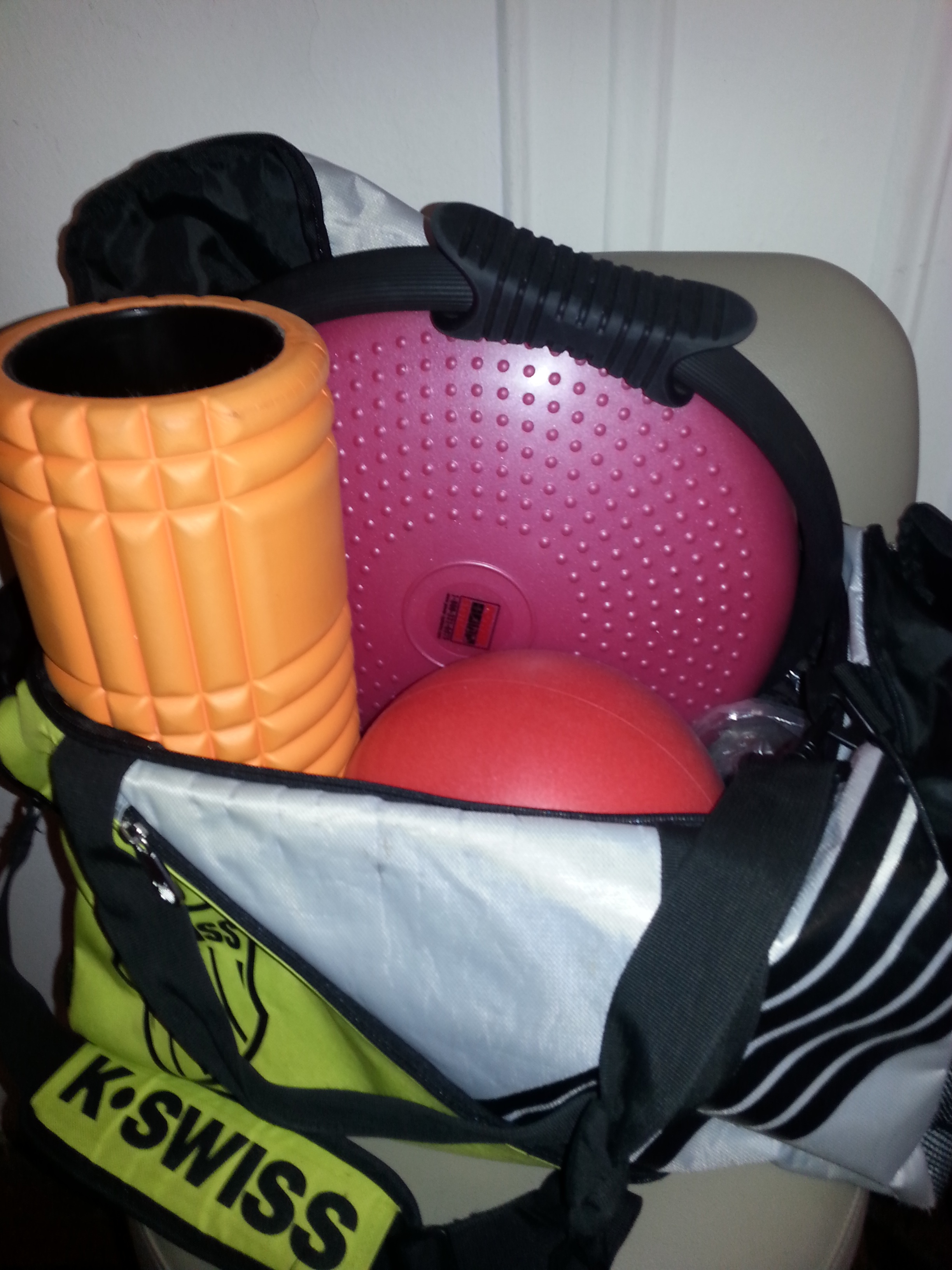
Anyone can set a good home gym with a few simple pieces of equipment. I have a plastic step, a Swiss ball, three sets of free weights, and a set of exercise, or “thera,” bands. An adequate and versatile array of home workout equipment can cost any where from twenty to a hundred dollars.
With so many of us going through financial hardship, this is good to know. Many people say they do not have the space at home, but really all you need is a space the size of an exercise mat.
If you know yoga and pilates, you do not even need any equipment. You just need to know what you are doing. Netflix has some great exercise videos for streaming on the Internet. I use them myself when I need a little inspiration. My favorite video for streaming is called, “Yoga for Aches and Pains.” It is simply a fantastic class, great for special populations or those of you with issues or even if you are just not feeling “yourself.”

Privacy: For those of you who are self-conscious, the gym may be a really hard place to feel comfortable or motivated. A good home exercise plan is great for shy people. It is very private; there are no people to change in front of, nobody watching you work out, etc. You are in your own shower or bath after you exercise, and you are in familiar, comfortable surroundings.

Convenience: Working out at home is super convenient. There is no waiting for machines or for space on the stretch mat. You can also watch what ever you want on TV, listen to any music you want, or just take in the peace and quiet. If solitude is not the reason that you exercise at home and you have the space, you can exercise with a workout buddy or two.

Time: Working out at home saves time commuting to the gym. You can also work out whenever you have time, at your own pace, as it suits your schedule. Many busy moms work out whenever they can fit it into their hectic days. For me, working out at home is a godsend, because my odd work schedule leaves me free mostly around noon when there are no outside exercise classes available.

Cleanliness: Your workout area and equipment is as clean as you make it. You don’t have to wipe someone else’s leftovers off a weight machine or rely on a less-than-enthusiastic maintenance crew at your local gym.

Remember, however, there are some challenges when it comes to a good home work out program.

Cardio: is the biggest challenge to a home workout program. How much running in place can you do? Jumping rope can be done indoors if you have room and won’t bother the downstairs neighbors with the noise. Dancing is a good way to get in some cardio if you like to dance. I do a cardio step routine, but be aware that you need to know how to do this safely.

Procrastination and Distractions: If you are the type of person who finds it hard to get motivated, and the TV is more tempting than doing squats and crunches, then working out from home may not be for you. If you go to the gym, you will exercise, you have no choice, there is nothing else to do there. If you feel that TV, chores, kids running round the house, a partner or spouse that need this or that, or the phone will keep you from working out at home, the gym may give you the physical and mental space you need to get your weekly exercising in.

Working out at home is convent, economical, clean and private. With a little self-motivation, it is possible to get into great shape with a good home exercise program. It is not for those who will just sit on the couch and think about lifting those dusty weights someday.

Yantra Yoga lecture review

Yantra Yoga Lecture at the Rubin Museum of Art: Review

I absolutely love the Rubin Museum of Art here in New York City’s Chelsea neighborhood. It is my new favorite place in New York City.

Recently, I went to go see the Bodies in Balance: The Art of Tibetan Medicine there. I read about the exhibit in the New York Times, and, being a Buddhist who is interested in yoga, Chinese medicine, martial arts, and Eastern philosophy in general, I went to the exhibit. Needless to say, it was astounding!

And so I signed up for the mailing list for the museum and learned about this summer’s series of workshops and lectures focused on Tibetan healing and medicine. I excitedly got tickets for the July 9th lecture on the Health Benefits of Yantra Yoga. I had never heard of Yantra yoga and I have been practicing yoga since the 1970s.

I got dressed up and went to the lecture. The space at the museum was beautifully set up — I enjoyed a classical Indian band playing on the floor level as I headed downstairs toward the lecture hall. I got my seat next to a bunch of professor types and yoga heads (I was probably the only person in the room who lifts weights).

We were greeted by the teacher — a Tibetan Lama (priest) — in full orange robes and a rust-colored skirt, and his beautiful Russian assistant wearing a super-cute Asian-style outfit.

One of the museum curators introduced the topic and then Lama Lobsang Palden, the teacher, rang a bell, and blew a horn and greeted us. He began his lecture by briefing us on his background: Like Yantra yoga, Lobsang was born in Tibet. During his lifetime, he had to flee to Nepal because of international turmoil. Yantra Yoga is a 500-year-old style of yoga, he explained. It was kept secret from the West for all of this time.

Next, it came time for a demonstration. As it turns out, one of the Lamas who teaches Yantra yoga did a mediation and came to the conclusion that it was OK to teach this style of yoga to the world. I suspect the reason may not be so spiritual, there is a ton of money in teaching yoga these days.

There is nothing wrong with this style of yoga as many people have asked my why it was kept secret. In Asia there are many cultural reasons for keep such things secret. Remember, Bruce Lee was one of the first Chinese immigrants to teach martial arts to Westerners, and many other Chinese hated him for it. He got into tons of trouble with his community of origin over bringing martial arts out of the East and into the West.

Yantra yoga involves a whole set of mental meditation. Lama Lobsang was very clear, too, about the mental process and mediation being the most important part of this yoga. “Do not just do this as exercise,” he warned.

This beautiful form of yoga combines martial arts-like moves, some movement mediation, pressure points, and lots of heavy, purposeful breathing. It was not an easy, gently yoga style like Hatha. Rather, it was a hard yoga style like Vinyasa. There were floor moves and standing moves and the practice of breathing through one side of the face that made it challenging. The standing moves included tree and triangle poses with circular arm movements that evoked Tai Chi.

Each move came with a mental process, one move got rid of jealousy, one anger, one brought in positive energy.

It seemed like you would feel great after taking a whole class.

Lama Lobsang also told us about herbs and diet in Tibetan medicine and offered a story about how he conquered ear infections with herbs and meditation. He also gave a good small talk on spirituality.

There is not a lot of information about Yantra yoga out there yet but Lama Lobsang is working on a book and DVD. I signed up to get notified as soon as they are produced.

Lama Lobsang greeted everyone at the lecture afterward and was just an amazingly kind, wonderful, and warm-spirited man.

You can find out more about Lama Lobsang on his website http://www.lamalobsang.com

This was an amazingly informative lecture in a beautiful space and a good time as well. I think I will benefit from attending this lecture for years to come.

The “Bodies in Balance” workshop series events will be going all summer. I highly recommend them to anyone. You can find out more about the Rubin Museum’s Bodies in Balance programs at rubinmuseum.org.